Who it is for
Businesses running their own software, online communities or internal tools, and teams that are unsure who can reach what.
Security console0
Simulated attempts, not live or client dataHome / Capabilities / Cybersecurity
Capability 04
For businesses that hold customer data, payments or passwords. We secure your software the way we secure our own: keep customers separated, keep keys out of the code, give each person and device only the access it needs, and keep a record.
Businesses running their own software, online communities or internal tools, and teams that are unsure who can reach what.
Access builds up over time. Keys end up in shared files, old accounts stay active, and when something looks wrong there is no record of what happened.
A plain-language list of what needs fixing, ordered by what could actually hurt you, plus the fixes and a re-test.
What we build
Each customer workspace (tenant) gets its own processes, storage and gateway. We run this ourselves on InfiniBot Cloud.
Passwords and API keys moved out of code, encrypted while stored and masked on screen. InfiniBot Cloud uses AES-256-GCM encryption for stored keys.
Sign-in through Clerk, permissions based on each person’s role, and limited-access device passes that need explicit consent.
Row-level security reviewed table by table, so the database itself refuses data the user should not see.
A record of who and what did which action, including AI agents.
Discord server permissions, moderation and role structures tightened for live communities.
Sample architecture
What this layer does
Every person proves their identity before anything else happens.
Tools we use for it
The rings, layer by layer
Each ring in the panel above is one layer of protection. Press “Send a test attempt” and watch it stop at the layer you selected. This is a simulation. The steps below use a sample bookkeeping firm, with staff signing in to read client files. Each layer checks something different, so a failure at one is not the end of the story.
No security work can promise zero risk. The aim is that one mistake does not become a disaster, and that you can see what happened.
Audit logs
A record of who and what did which action, including AI agents.
0simulated attempts blocked
How to read this console
Everything in this console is made up to show the idea. It is not live, and it is not data from any client.
Process
We list what you run, who can reach it, where passwords and keys live, and which data matters most.
We inspect access rules, database rules, how keys are handled, and what is reachable from the internet.
You get a plain-language list of findings, ordered by what could actually hurt you.
We make the fixes, or work with your team, then re-test that they hold.
The stack
We pick for your system. These are what we work with most in this area.
You do not need to know these names. In plain terms: Clerk handles sign-in, Postgres RLS and Supabase protect stored records, AES-256-GCM encrypts stored keys, scrypt protects passwords, HMAC checks that a message really came from its sender, Tailscale builds private connections, and Docker keeps programs separated.
Deliverables
Related work
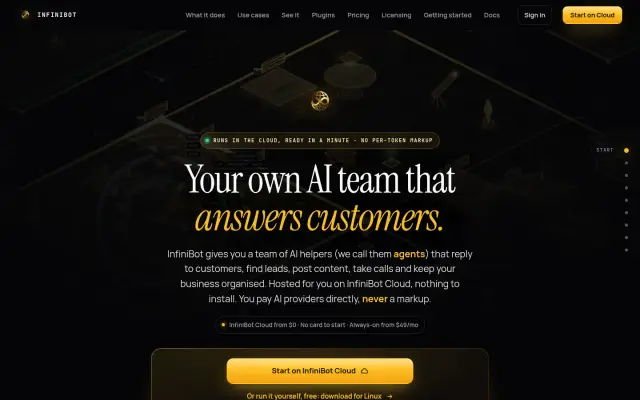
An AI operating system for a business: one always-on hub connecting 18 chat channels, background helpers, shared memory and 46 plugins, hosted privately or on your own computer.
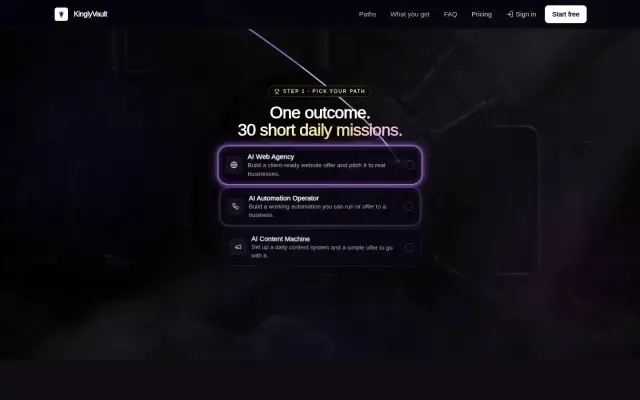
A membership platform for AI courses, tools and community that links safely to each member's own InfiniBot, with no network ports to open.

Three disconnected codebases merged into one live platform for a Phoenix vegan food truck: online orders, a music and goods shop, loyalty, reviews and one safe checkout.
FAQ
We review and strengthen business software and infrastructure: keeping customers separated, handling passwords and keys, sign-in and access, database rules, audit logging, private networking and community moderation.
We do not hold or claim those certifications. We describe what we build and run. If you have a compliance requirement, tell us up front and we will say what we can and cannot do.
Talk to us about your needs. We focus on reviewing and strengthening systems. If you need a formal third-party penetration test for an auditor, you will need an independent firm.
Yes. A review of an existing system is often the best starting point, and it is the usual first step of a Systems Assessment.
Answer a few questions and send them to us. We will tell you what we would build, and what you do not need.