Key features
Trading desk
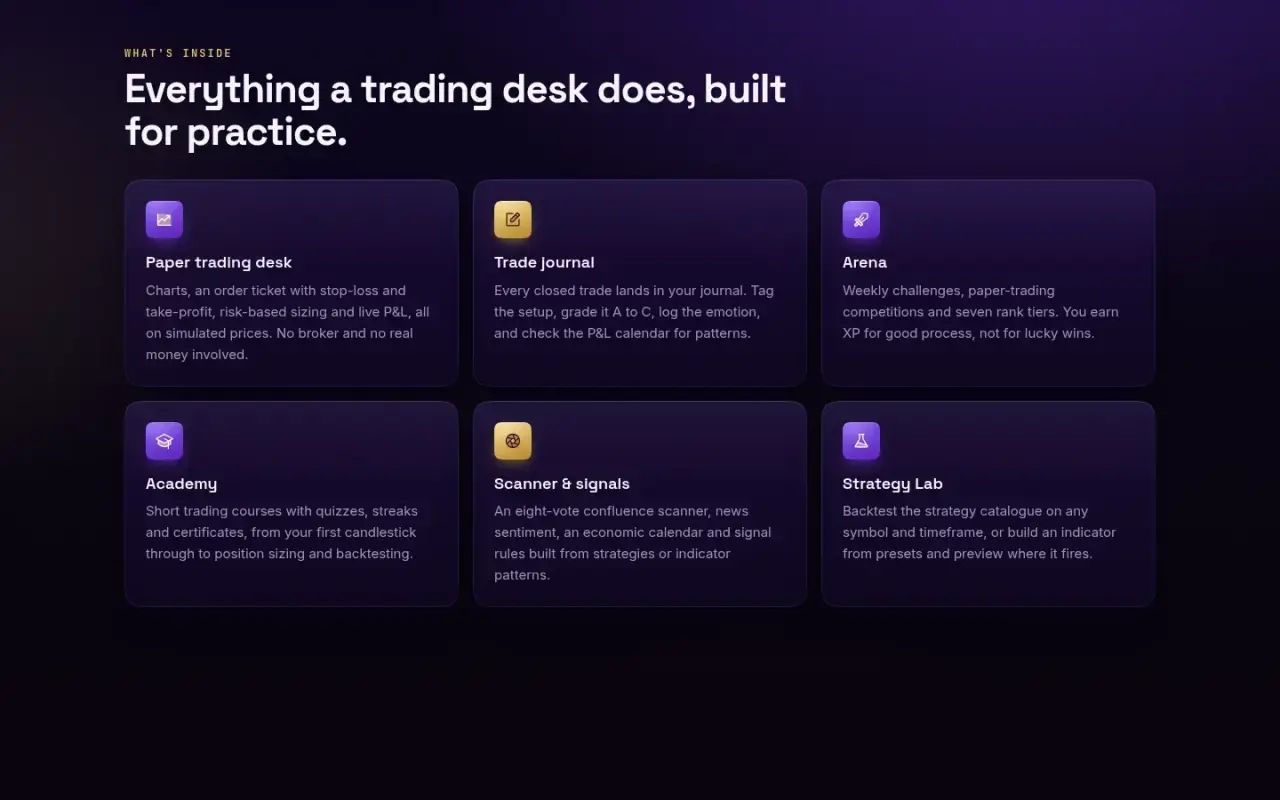
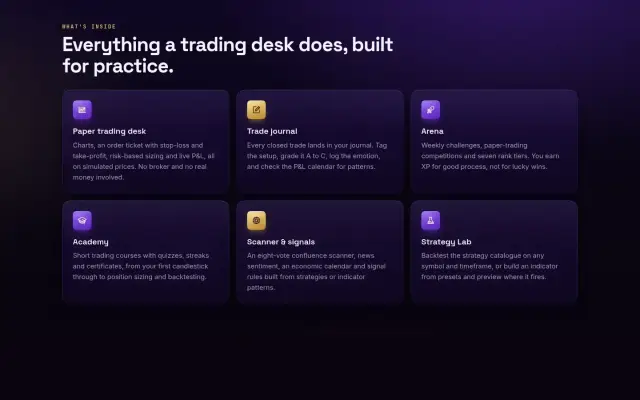
- Paper desk with charts, watchlist and order ticket: market, limit and stop orders with stop-loss and take-profit
- Risk-based position sizing, plus calculators for compounding, lot size, risk of ruin, reward-to-risk and pip value
- Chart Grid with several live charts, per-tile symbol and timeframe, and saved layouts
- Advanced Terminal: multi-chart layouts, about 85 studies with no per-chart limit, drawing tools, volume profile, Heikin Ashi, Renko and range charts, and bar replay with a practice book. It integrates the MIT-licensed Quant Terminal project, and in this workspace orders are paper only
Research and testing
- Strategy Lab with 15 strategies and a backtester, plus walk-forward, overfitting and cost-stress checks
- Eight-vote scanner that combines several signals, with export to TradingView's Pine language
- No-code indicator builder with 7 patterns
- Signal rules evaluated at bar close, economic calendar and intel feed
Journal and school
- Journal with tags, grades, emotions, a calendar, habit statistics and PDF or CSV export
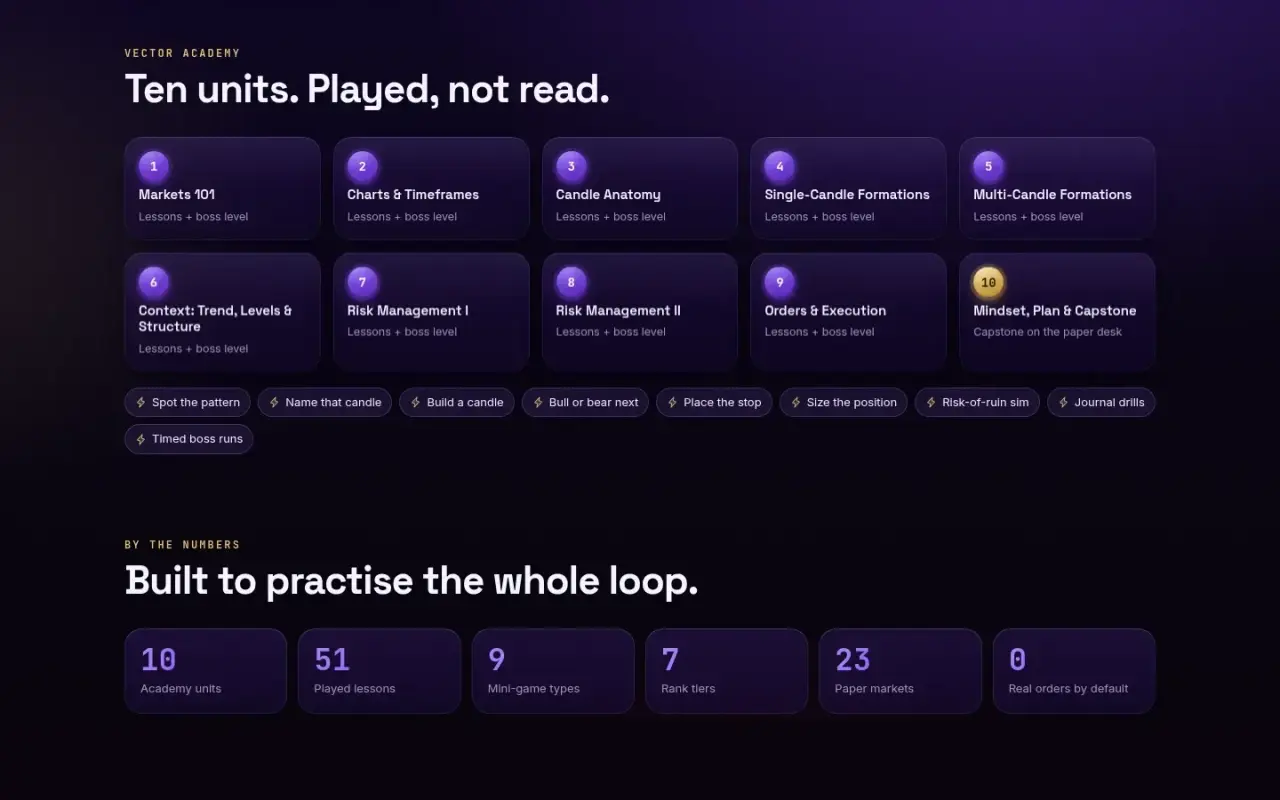
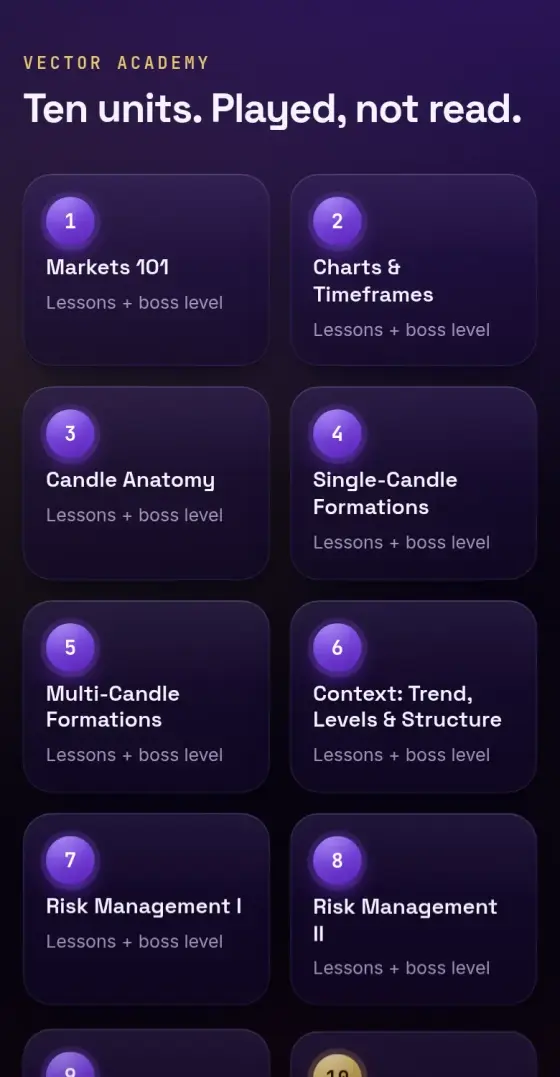
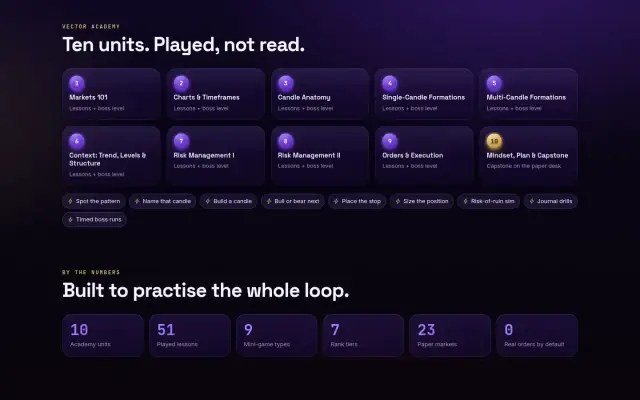
- Academy with 10 units and 51 played lessons, built as a game with levels, boss rounds and a spaced review queue
- Risk rules engine that shows a broken rule next to the order and records it in the journal
- AI coach that is rule-based by default, explains concepts and refuses to make trade calls
Arena and arcade
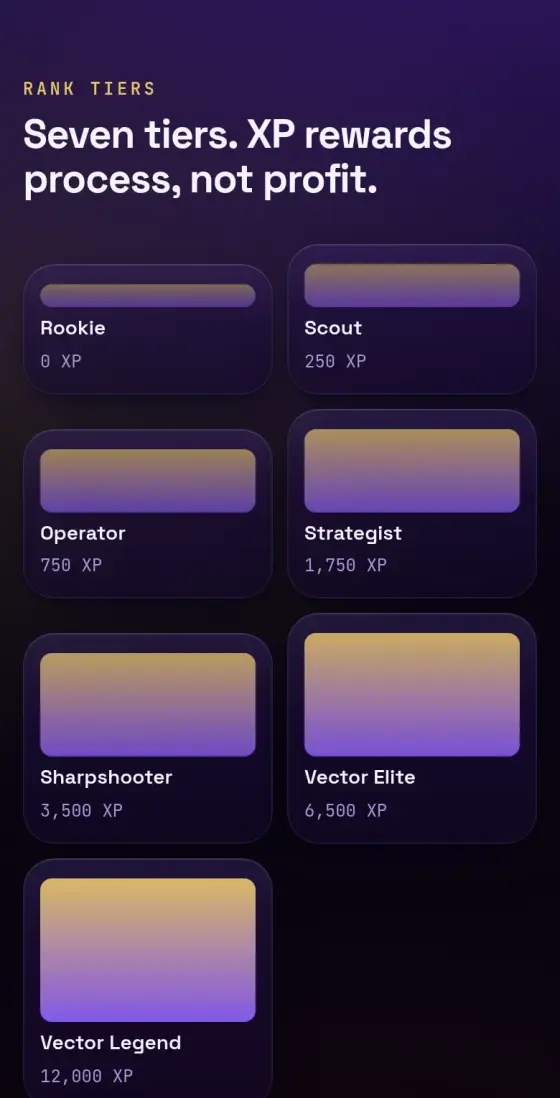
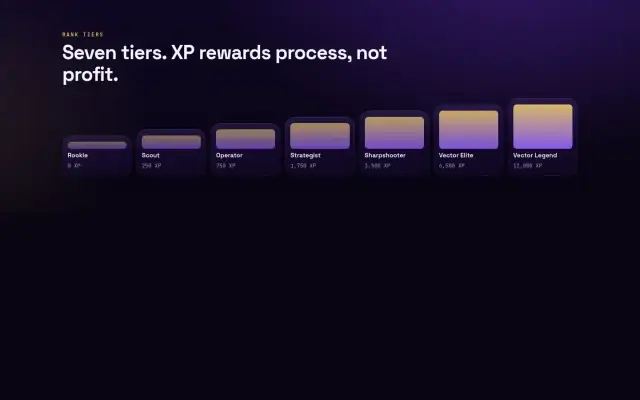
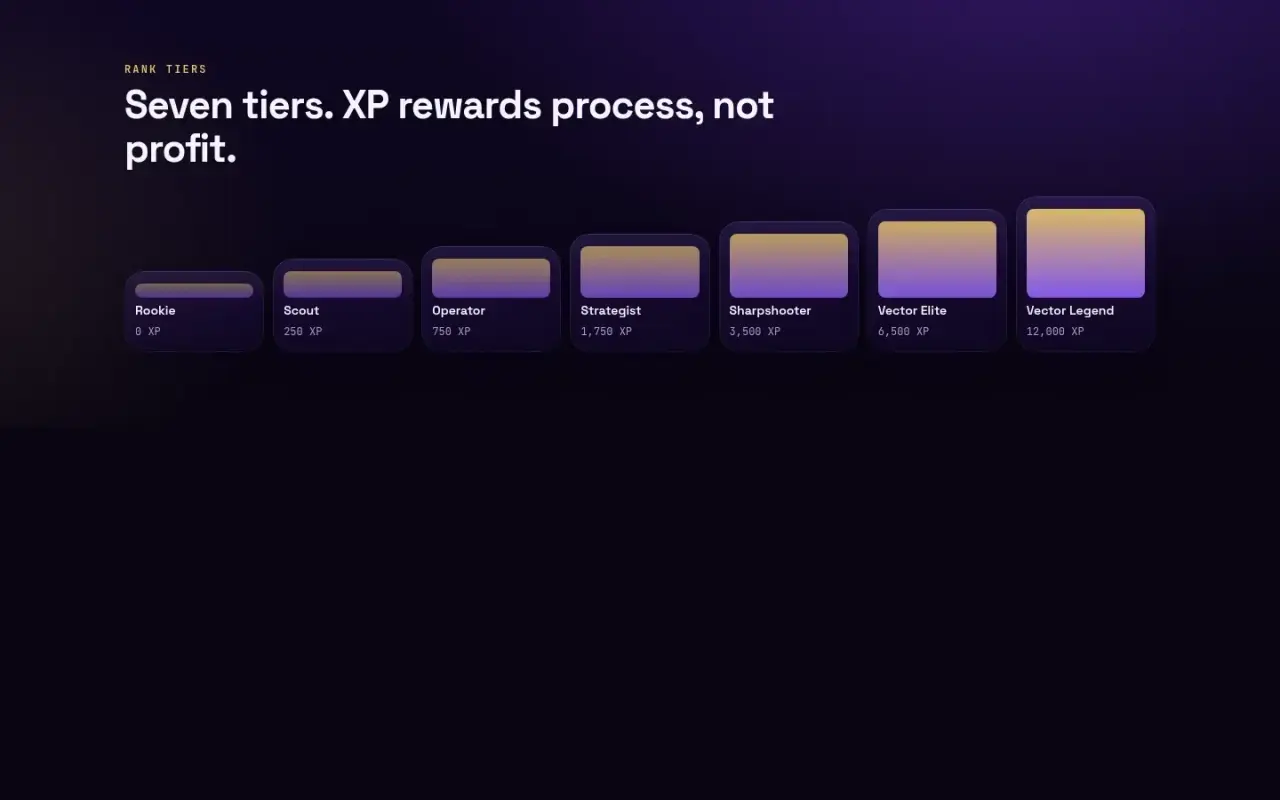
- 9 mini-game types and 7 rank tiers, with XP awarded for process rather than profit
- Daily challenge and weekly tournament with leaderboards that show only a display name and score
- Opt-in paper competitions
Delivery
The current repository starts on 20 October 2026, when we combined the two existing platforms into a single codebase. It holds 372 commits across branches through 28 October 2026. Work ran in focused branches (order entry, indicators, position accuracy, seconds charts, history depth), each with its own written document and test evidence.
Indicator accuracy is a good example of the process. For the classic studies we read values out of TradingView's built-in indicators on a shared data feed, then compared them to ours point by point and recorded the error in a parity table in the repository.
Security & infrastructure
- Admin privacy boundary. A server guard sits outside every generic data route, for all callers including admins. It rejects anything that touches trading data. The blocked list is read from the trading database file, so new tables are covered automatically. Tests use two users and an admin against a real database.
- Per-user limits. Every trading route requires sign-in, and every database query is limited to the signed-in user. No admin path exists.
- Tamper-resistant games. The server issues every game seed, stores it, and re-runs the game from the seed and action log. It never reads a score from the client.
- Scoped agent access. Device tokens are hashed, rotating and revocable, and money-moving routes cannot be reached with them.
- Paper by default. New members trade simulated money. Linking an external broker account is a separate path with sealed credentials, a per-account opt-in that defaults to off, a server-side plan check, an audit trail and an operator kill switch.
- Billing. Membership runs through signed Whop webhooks, and access is checked on the server.
What's next or limits
Most of the product sits behind sign-in, so the images here show the public site only. Some features depend on operator settings or on a member's own key. These include live research sources, the AI journal read and Telegram delivery. Default prices come from a labelled simulated feed.