Key features
- Natural conversation with no app, menu or staff member in the loop. A sign, a post to stand at, and a robot that answers.
- Four primary languages, with mid-conversation switching that keeps the character's personality and the thread of the conversation.
- Interruption handling. The character stops mid-word and picks the conversation back up.
- Vision-aware replies about what is actually in front of the robot.
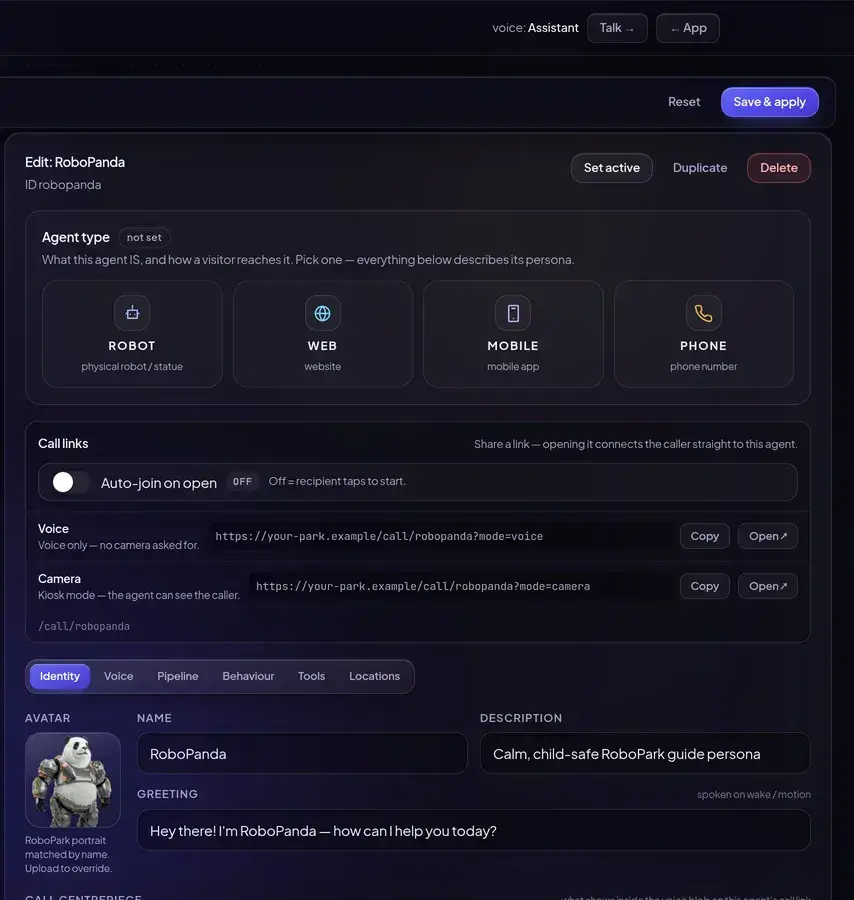
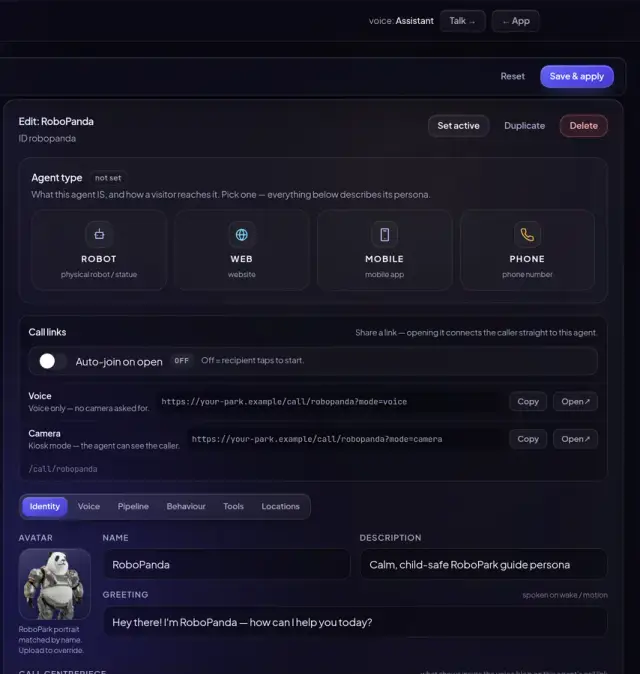
- Nine distinct written character personalities, editable and re-deployable overnight.
- A named, gated movement command set with stop, reset and safe-state behaviour.
- Saved movement sequences.
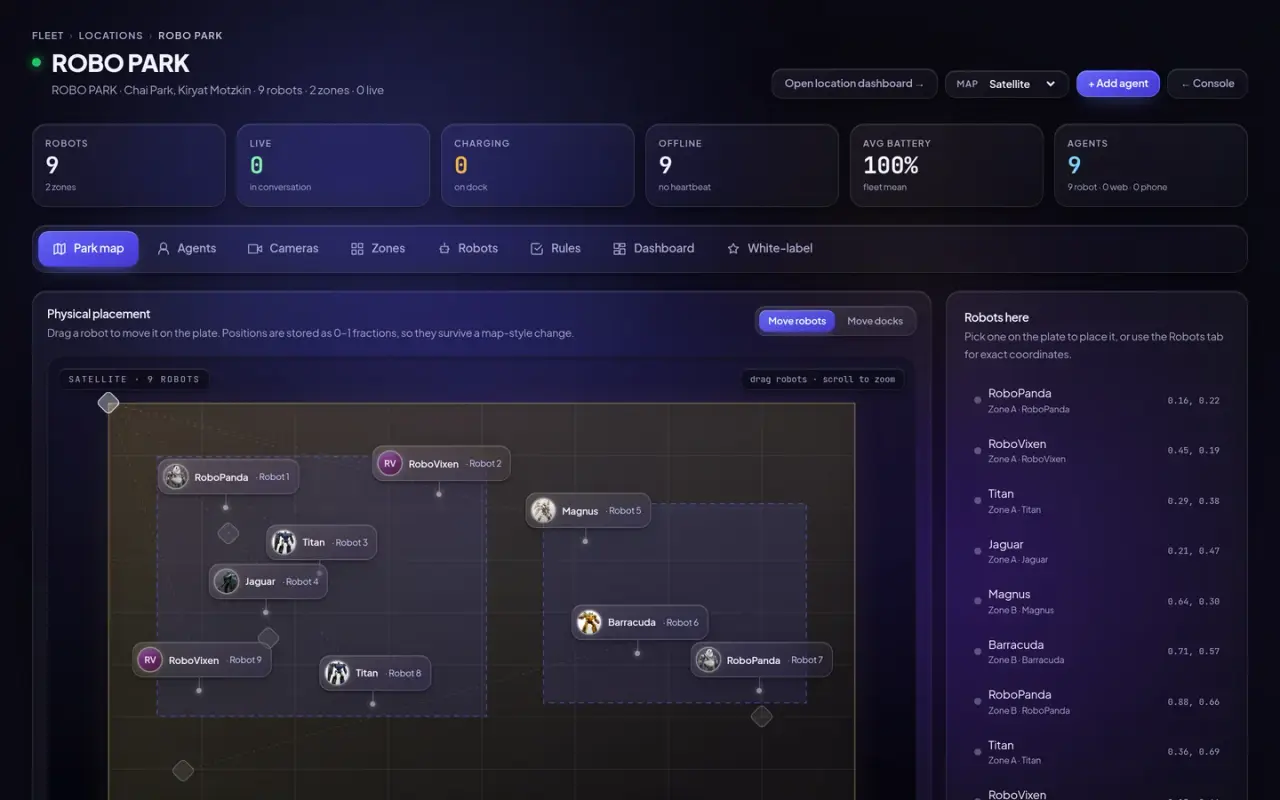
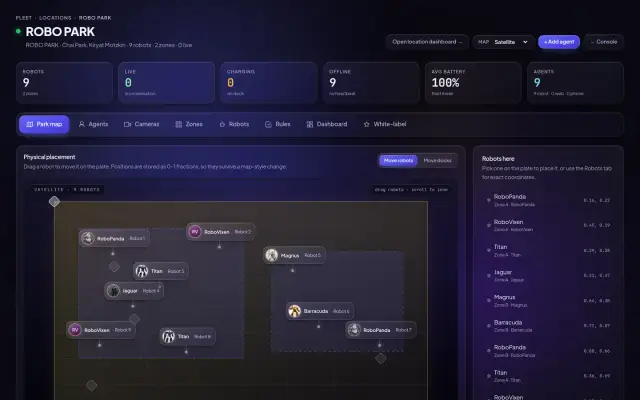
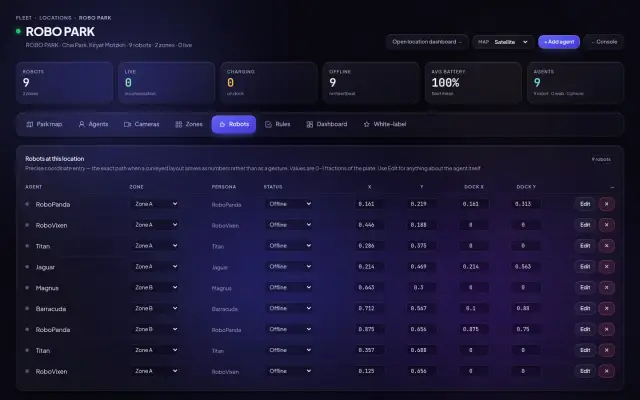
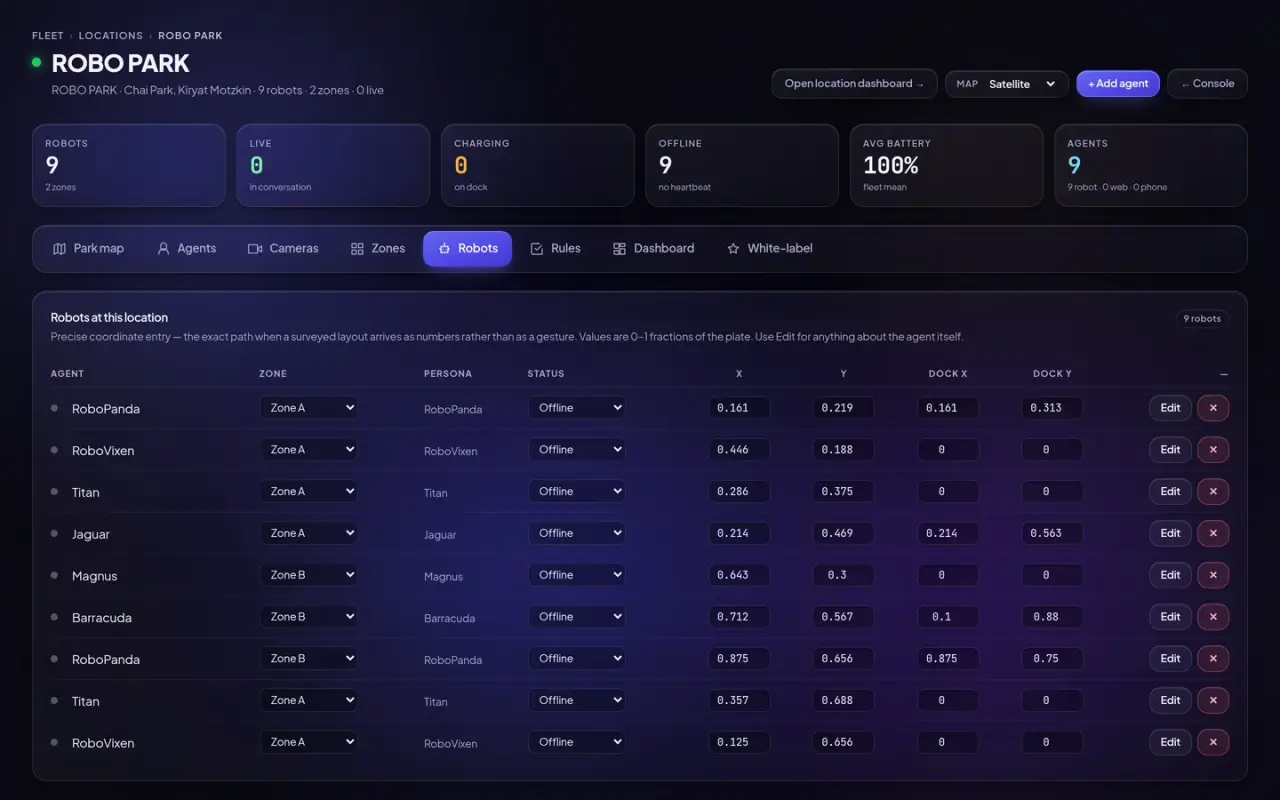
- A multi-site fleet console with zones, robot placement, line-ups and per-character test links.
Delivery
The work ran in stages, and the stages changed when reality did.
- Foundation. Voice infrastructure, vision integration and character direction were built first, along with the plan for how the parts work together.
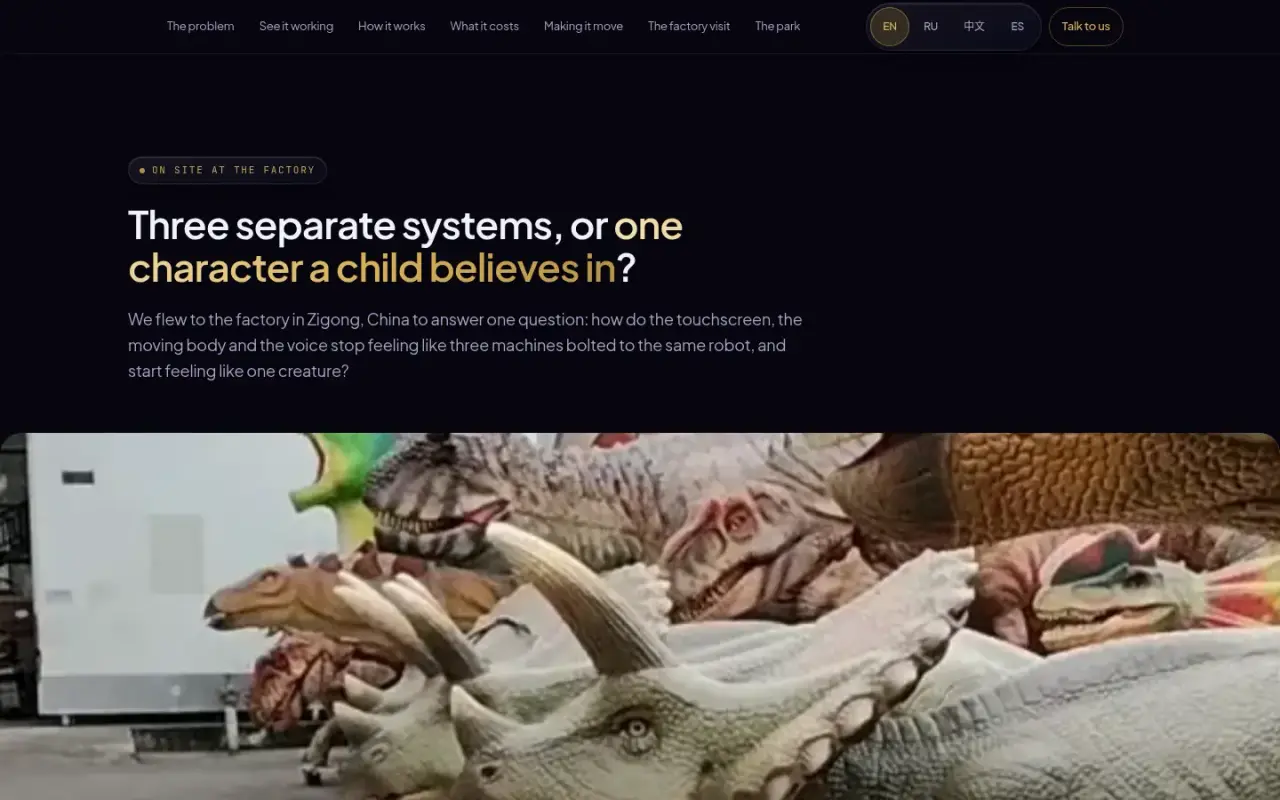
- Factory visit, Zigong. We went on site to work out how the touchscreen, the moving body and the voice could feel like one creature instead of three machines. Seeing bodies at every stage of construction informed where a microphone and speaker could sit. It also showed that a software interface for movement was not coming.
- Motor server. A first working version of motor control was built in China with a local hardware specialist: a small web service that controls the relay board, with an emergency stop.
- Single-robot baseline first. Rather than integrate across the fleet at once, the plan confirmed one robot end to end, then repeated the pattern.
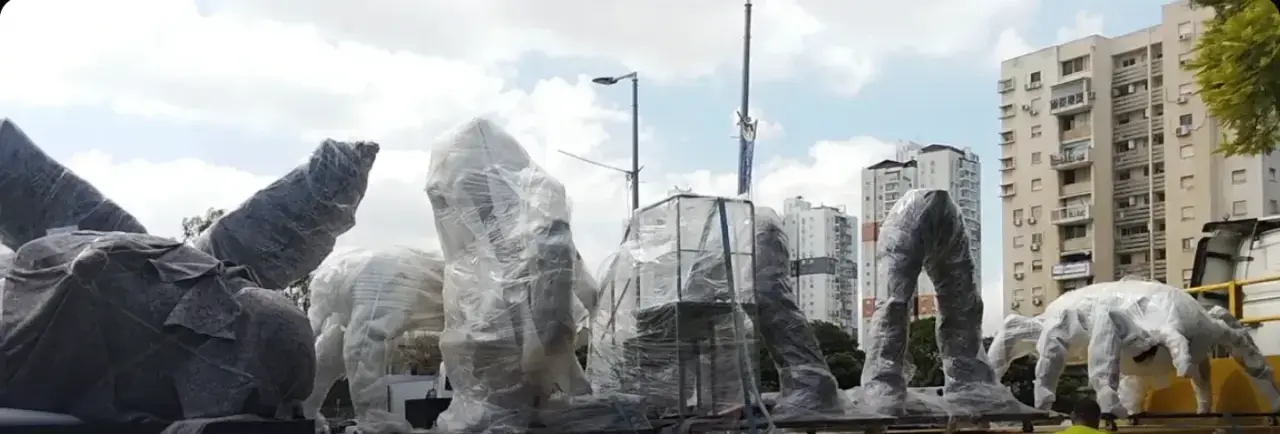
- Installation, July 2026. The characters arrived shrink-wrapped on flatbed lorries and were placed by forklift onto steel base plates. The system had to be finished against robots that only existed in their final form once they were on site.
- Opening, 18 July 2026. The park opened to the public.
- Afterwards. Tuning continued in production, including the motion-triggered greeting and speech recognition changes aimed at a noisy open-air park.
Security and infrastructure
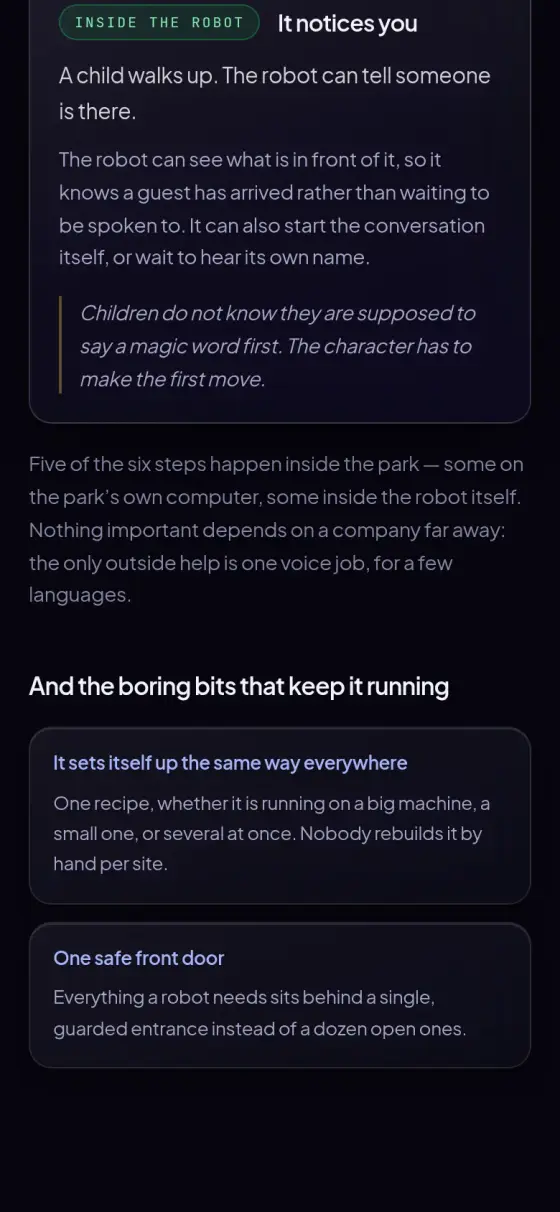
- Local-first by design. Hearing, thinking, seeing and most speech run on the operator's own machine at the park.
- Remote access without exposure. Tailscale and a Cloudflare tunnel provide remote diagnostics into the hardware without opening the park's network to the internet.
- Single entry point. Web server software (nginx) sits in front of the services, so everything a robot needs sits behind one guarded entrance.
- Repeatable deployment. Ready-made setup recipes cover machines with or without a graphics chip, Apple computers and setups split across several machines. A per-device registry records which robot is which.
- Physical safety in software. AI output can only reach approved, named actions, and stop behaviour sits below the AI.
What this shows
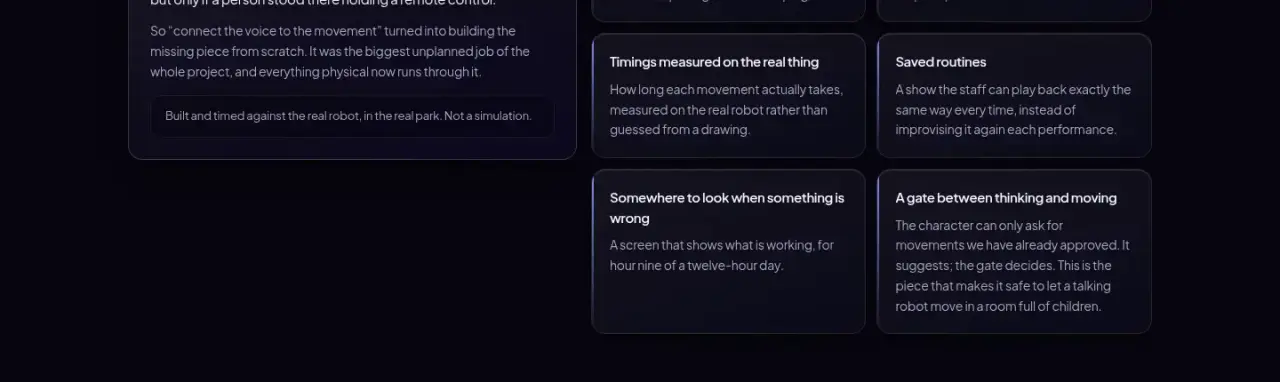
Most of the risk in this project was not in the AI. It sat in the gap between software and a physical machine that nobody had specified, in a public place, with a hard opening date. The value of a systems builder here was treating that gap as engineering: a contract for what the robot can be asked to do, a gate in front of it, and an operator's screen for hour nine of a twelve-hour day.